

 TecnoSpeed's PlugDFe Electronic tax documentsPlugDFe Suite Tax components
 PlugNotas Invoice issuance API
 PlugStorage Fiscal Document ManagerSPED XML Automate your SPED Fiscal
 DecisionIT Efficiency and safety during tax reform
 PlugBank Financial Solutions HubPayment Slip API Issuance, registration, and reconciliation of payment slipsOpen Finance Statement Integration of bank statements and card invoicesAPI Pix Pix payment integrationAccounts payable Automation of the entire financial routine
To verify bills, statements, and confirm payments. No integration, no unified visibility.
Without an automatic search engine, titles are lost, expire with fines, or are paid incorrectly, with a risk of fraud.
Suppliers, salaries, taxes, DARF: each one is a manual, slow process without traceability.
Export bank statement, open in Excel, cross-reference with ERP. Hours wasted on something the API does in seconds.
Tickets via email can be tampered with. Without direct bank validation, the risk is real and growing.
ERP shows what was launched, bank shows what was removed. Without integration, there are always discrepancies.
A medium-sized company with 3 employees in finance, each spending 30 hrs/month in operational tasks.
The gain is even greater for those who operate at scale:90 hours/month of pure cost, without strategic value.
This is what the PlugBank Suite delete.

Client CNPJ tickets imported automatically, no email, no PDF, no manual search.
View details
Pay bills, TEDs, Pix, salaries, and taxes directly from the ERP. No internet banking.
View details
Checking account and card at 47+ banks. No VAN, no letter to the manager, no manual export.
View details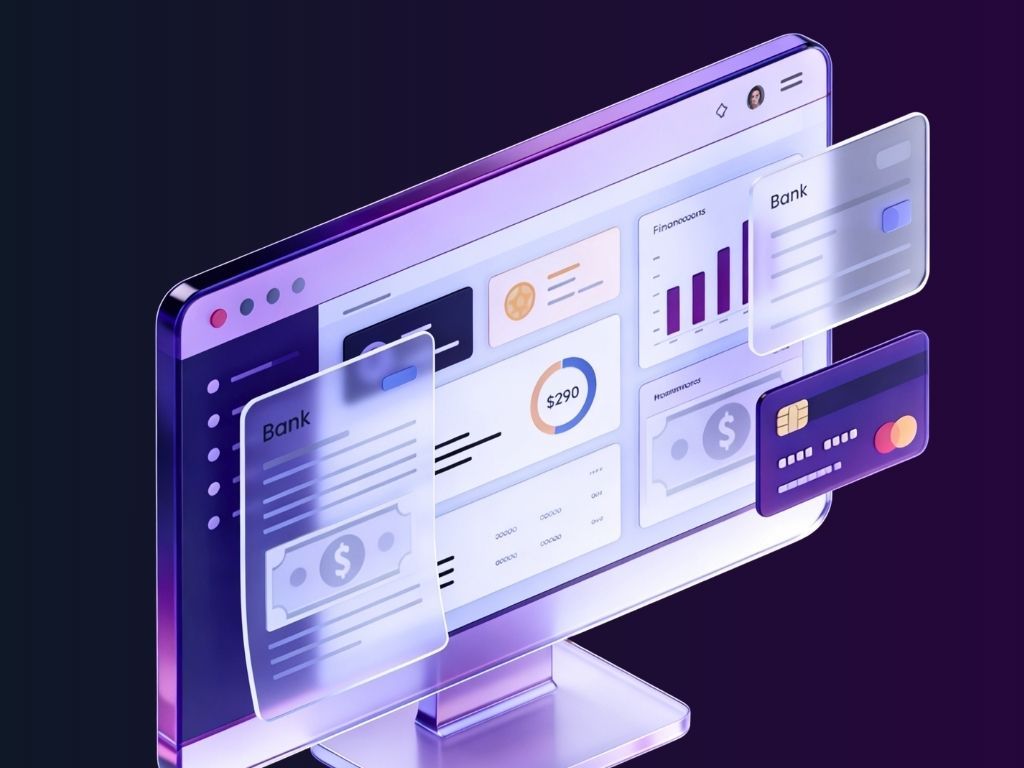
Everything that used to be spread across internet banking, now within your ERP.
Tickets validated directly at the bank.
New records appear in the ERP.
Without accessing online banking.
Titles x releases, no friction.
Unified payroll and cash flow.
Integrated DDA + ERP.
_s4KwhOxyO.jpg)
Even JSON for bank slips, Pix, TED, salary, and taxes.
Unique layout, any bank.
Instant confirmation, no polling.
Assignor and conferred bars.
Bank changes absorbed.
Boleto, Pix, TED, salary, tax, supplier.
The bank registers the payment immediately.

Digital authorization, immediate scale, card included.
PF (44) and PJ (36) covered.
Invoices via Open Finance, new in 2026.
No manual export in the ERP.
In-app direct consent.
No letter to the manager.
TecnoSpeed assumes regulation.
Processing Accounts Payable the old way: each bank, each bill, and each reconciliation done manually, every day.
A single architecture connects the ERP to 47+ banks: DDA, Payments, and Open Finance in one contract, with maintenance covered by TecnoSpeed.
"API integration is no longer just a way to record payments. It has become a strategic tool for management and competitive intelligence."
TecnoSpeed's support team is made up of developers who understand banking integration. We assist with onboarding, technical questions, and mediation with banks.
Cryptography, direct bank validation, FAPI certification, and mTLS. TecnoSpeed is approved by the Central Bank for Open Finance.
Infrastructure ready for millions of transactions. Pay for what you use, scale without rewriting a line of integration.
Every payment confirmation or new title triggers a direct event in your ERP. Zero polling, zero delay.
A single contract covers bank slips, Pix, TED, taxes, and salaries. No bank-to-bank CNAB. Integrate once, use everywhere.
Banks change rules all the time. TecnoSpeed updates integrations without cost or effort for the Software House.
Everything to make the first transaction: authentication, credentials, and the first payment call.
See first stepsQuery, download, status, and scheduling operations. Step-by-step guide for customer enablement flow.
View DDA documentationComplete documentation for statements and credit cards via Open Finance—step 3 of the journey.
View dedicated pageFull list of supported banks and available integration types for each.
View supported banksWith over 47 integrated banks, including all the major banks in Brazil, the Suite eliminates the pain of negotiating and getting approval from bank to bank.

With +47 integrated banks, the answer for your client is almost always yes.
Homologating from scratch consumes 240 to 280 hours per bank. This is already done.
New integrated bank? Your ERP already supports it, without a single new line of code.









"Financial integration is no longer a differentiator; it is a necessityAnyone still relying on internet banking is delivering less than what customers expect.
— Blog TecnoSpeed · Automação de Pagamentos, 2025
The PlugBank Accounts Payable Suite is an all-in-one financial automation solution for ERPs. It combines three integrated APIs: DDA API (automatic retrieval of bank slips issued against the customer's CNPJ), Payments API (executing bank slips, Pix, TED, salaries, and taxes directly from the ERP), and Open Finance Statement API (checking accounts and credit cards). It replaces manual internet banking procedures with unified, real-time automation.
DDA (Authorized Direct Debit) is a system that centralizes all electronic bank slips issued against a CNPJ. TecnoSpeed's DDA API automatically queries this environment and imports bills directly into the ERP dashboard—no PDF files, no emails, and no manual typing required.
The Payments API supports bank slips (boletos), Pix, TED, salaries, taxes (DARF, GPS, etc.), and supplier payments using a single standardized JSON layout across all supported banks.
The Suite is integrated with over 40 major financial institutions in Brazil, including Itaú, Banco do Brasil, Bradesco, Santander, Caixa, Sicoob, Sicredi, Banco Inter, and C6 Bank.
Reconciliation happens automatically via Open Finance and real-time Webhooks. Once a payment is executed or a transaction posts to the account/credit card, status events immediately update the ERP financial records, eliminating manual spreadsheet matching.
Most partner development teams achieve full production setup in less than 30 days thanks to standardized JSON payloads, sandbox environments, and dedicated dev-to-dev support.
You can integrate them incrementally based on your ERP's roadmap. Whether starting with DDA, Payments, or Open Finance, each API operates independently while sharing the same infrastructure.
Yes. All payments processed by the Payments API undergo real-time security validation (assignor data verified, barcodes validated, limits checked). PlugBank operates with SSL, PCI DSS, LGPD compliance, and Brazilian banking regulations. Open Finance APIs use OAuth 2.0, FAPI, and mTLS—the strictest financial security standards regulated by the Central Bank.